
Better Data for Better Bear Management
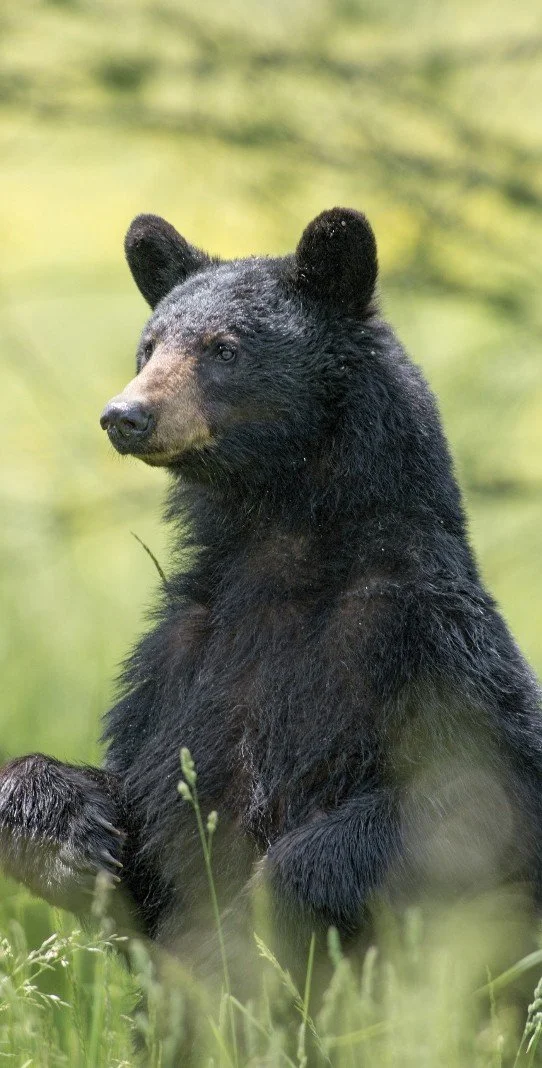
As bear populations rise and human–bear interactions become more common, state fish and wildlife agencies increasingly need reliable human dimensions data to guide effective management decisions.
Responsive Management has more than 35 years of experience helping agencies understand what people know, experience, believe, and support when it comes to bears and bear management. Our research has examined perceived and desired bear population levels, frequency and severity of human-bear conflicts, tolerance for bears, safety and property concerns, and public support for management strategies, including hunting.
Responsive Management has conducted bear-related research for agencies across the country, including projects in Alaska, Florida, Louisiana, Maine, Maryland, Massachusetts, Michigan, Pennsylvania, Tennessee, Virginia, Washington, West Virginia, and Wyoming. These studies have established baseline human dimensions data, identified key geographic and demographic differences, and tracked changes over time in residents’ opinions and attitudes.
When bear management challenges arise, Responsive Management can provide the data agencies need to understand the human side of the equation.
Examples of Responsive Management’s Bear Research
Florida Residents’ Attitudes Toward Bear Management
Massachusetts Residents’ Attitudes Toward Black Bears and Black Bear Management
Louisiana Residents’ and Landowners’ Attitudes Toward Black Bear Management
The Opinions of Maine Residents Regarding Bear Management
Public Opinion and Knowledge of Grizzly Bear Recovery
Washington Residents’ Opinions on Bear and Wolf Management
Public Attitudes Toward Black Bear Management in Maryland
Tennessee Residents’ Opinions on the Management of
Black Bears
Virginia Residents’ Opinions on Black Bear Management
Pennsylvania Residents’ Opinions on and Attitudes Toward Black Bears
Michigan Residents’ Opinions on and Attitudes Toward Black Bears
Public Attitudes Toward Grizzly Bear Management in Wyoming
Washington State Residents’ Attitudes Toward Grizzly Bears and Grizzly Bear Augmentation
West Virginia Residents’ Opinions on Black Bears and Black Bear Hunting
Anchorage, Alaska Residents’ Attitudes Toward Bear Management Issues
Responsive Management Conducts:
Multimodal surveys
Telephone surveys
Mail surveys
Online surveys
Intercept surveys
Personal interviews
Focus groups
Needs assessments
Market analyses and inventories
Message testing
Literature reviews
Data collection to support strategic plans
Responsive Management Bear Survey Project Highlights
Maine Residents’ Opinions on and Attitudes Toward Bear and Big Game Management. In a study for the Maine Department of Inland Fisheries and Wildlife, Responsive Management conducted extensive human dimensions research to understand public attitudes toward black bear and other big game management, including the issues at the center of Maine’s Question 1 referendum on the use of bait, dogs, and traps in bear hunting. The quantitative phase of the study included scientific, probability-based surveys of Maine residents, landowners of large tracts, and hunters. Responsive Management then completed a qualitative data collection phase that included focus groups and public meetings throughout Maine, and an online public input forum for additional feedback. The research provided a detailed picture of the attitudes underlying the referendum debate while helping inform broader goals and priorities for Maine’s updated statewide Big Game Management Plan.
The Attitudes of Virginia Residents, Bear Hunters, and Agricultural Producers Toward Black Bears and Black Bear Management. Responsive Management partnered with the Virginia Department of Wildlife Resources to conduct a comprehensive statewide human dimensions study to guide the development of Virginia’s 2021–2030 Black Bear Management Plan. The project included probability-based surveys of Virginia residents, licensed bear hunters, and agricultural producers (the latter in cooperation with the Virginia Farm Bureau). The resident and hunter surveys provided statewide and regional insights, while questions repeated from earlier Responsive Management research allowed the agency to track changes in public attitudes over a decade.
Florida Residents’ Attitudes Toward Bear Management—2026 Trend Update. Responsive Management is conducting a new scientific, probability-based survey for the Florida Fish and Wildlife Conservation Commission (FWC) to measure Florida residents’ attitudes toward black bears and bear management and, importantly, to determine how those attitudes have changed over the past decade. The study builds directly on a baseline survey conducted by Responsive Management for FWC in 2016, which examined knowledge of bears, experiences and conflicts with bears, attitudes toward bear populations and habitat, and opinions on black bear hunting. The new study will obtain at least 1,200 completed interviews with Florida residents, with sampling stratified across FWC’s seven Bear Management Units to provide statewide and regional results. Through a comprehensive trends analysis, Responsive Management will identify where public knowledge, perceptions, experiences, and attitudes have shifted since 2016.